21700 vs 18650: Which Battery Cell Is Better?
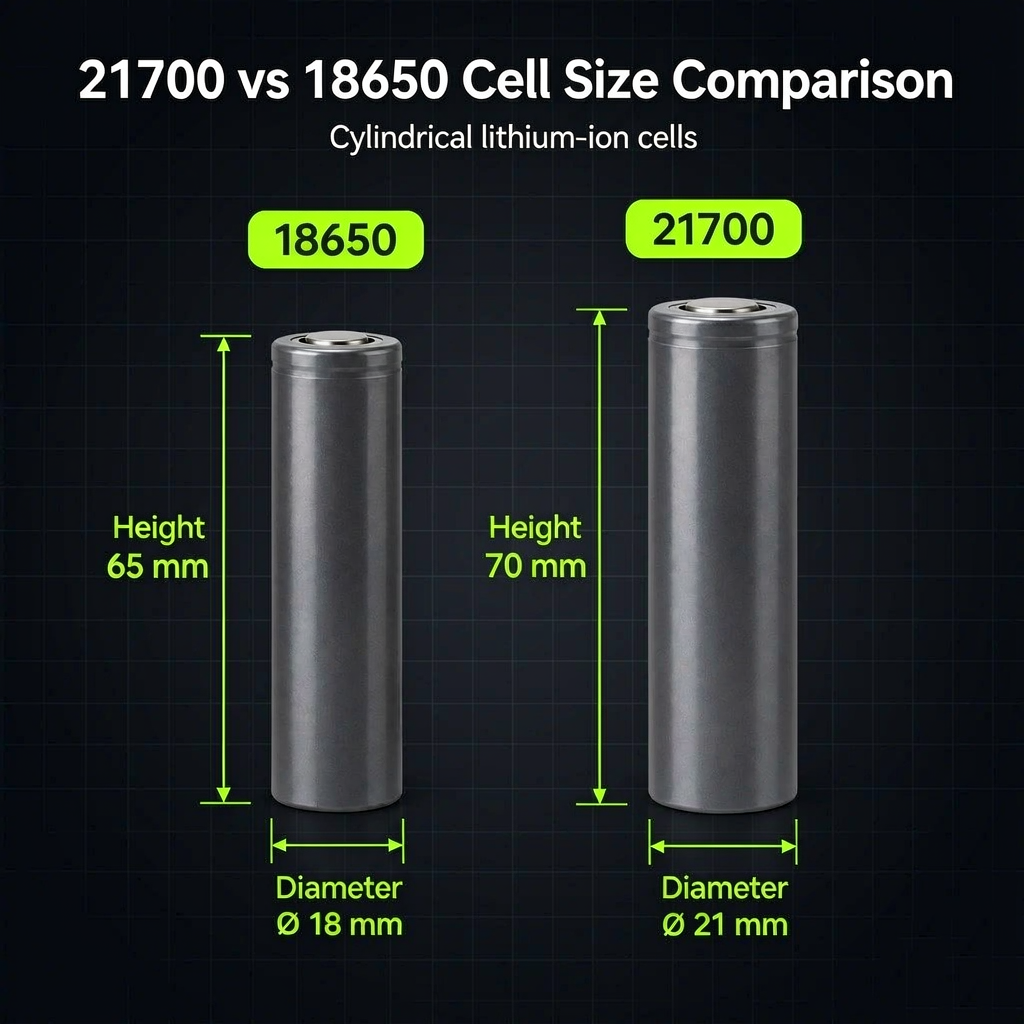
For a modern power bank, 21700 is usually the better cell: it stores noticeably more energy per cell than an 18650, at a similar cost and with a more robust metal can. The 18650 still makes sense where space is tight or where you're replacing cells in older devices.
The two names are just dimensions — and that's where the difference starts.
What the numbers actually mean
Both are cylindrical lithium cells, and the model number is the size:
|
Cell |
Diameter |
Length |
Roughly |
|
18650 |
18 mm |
65 mm |
Slim, older standard |
|
21700 |
21 mm |
70 mm |
Slightly fatter and longer |
That extra 3mm of diameter and 5mm of length doesn't sound like much, but volume grows fast with radius — and volume is where energy is stored.
Capacity and energy density
Typical ranges you'll see from reputable cell manufacturers:
|
Cell |
Typical capacity |
Notes |
|
18650 |
~2,500–3,500 mAh |
The long-standing standard; high-drain variants trade capacity for current |
|
21700 |
~4,000–5,000 mAh |
More capacity in one cell; now common in power banks and EVs |
Because a single 21700 holds more, a device that needs a given capacity can use fewer cells — which means simpler construction, fewer welds and fewer points of failure.
Head-to-head
|
|
18650 |
21700 |
|
Dimensions |
18 × 65 mm |
21 × 70 mm |
|
Typical capacity |
2,500–3,500 mAh |
4,000–5,000 mAh |
|
Energy per cell |
Lower |
Higher |
|
Maturity |
Decades of use, huge installed base |
Newer, now mainstream |
|
Common uses |
Laptop packs, flashlights, older vape mods, legacy gear |
EVs, modern power banks, energy storage |
|
Best for |
Replacing cells in older devices, slim form factors |
New designs, swappable-cell products |

Why 21700 took over

The shift started in electric vehicles. Tesla and Panasonic moved from 18650 cells in early models to 21700 cells in the Model 3, largely because fewer, larger cells simplified the pack while raising energy density. That manufacturing scale pulled 21700 costs down and availability up — which is why it became viable for consumer products.
The practical consequence for you: replacement 21700 cells are easy to find from multiple manufacturers, which is exactly what a "replaceable battery" product needs. If a design depends on a rare cell format, "replaceable" is only theoretical.
Which one should your power bank use?

Choose 21700 if you want:
- More capacity from a single cell
- A swappable design with widely available spares
- Fewer cells for the same capacity
18650 still makes sense if you:
- Need to replace cells in older equipment built around it
- Want the slimmest possible form factor
- Already own a stock of them (flashlights, legacy devices)
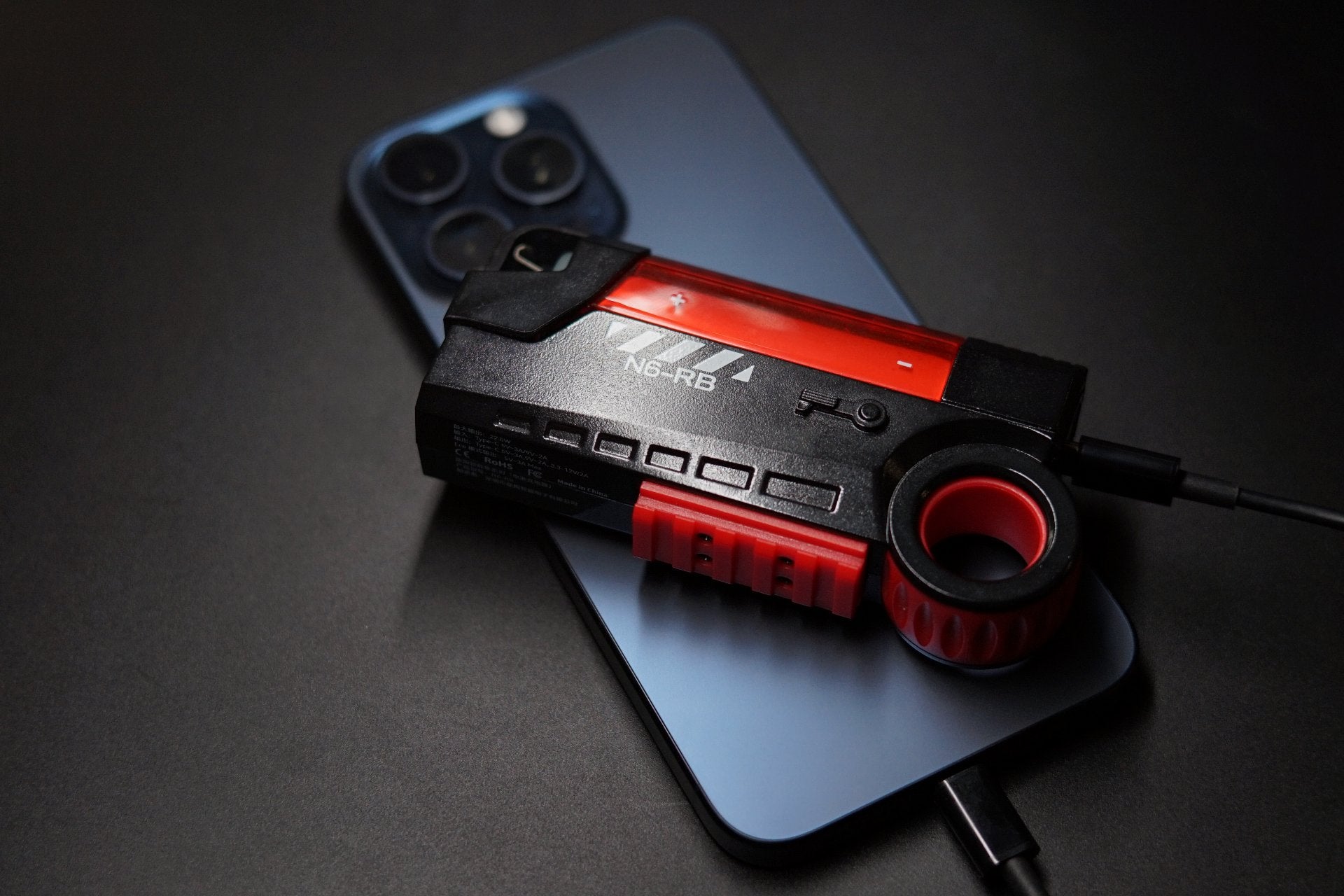
For a product designed around swapping cells, the 21700 is the clear choice — it's what the KangTao Smart N6-RB uses. One cell provides 5000mAh, the unit weighs 55g, and spares are a standard, purchasable part rather than a proprietary pack. You can see the full spec on the N6-RB product page.

To understand why a swappable cell matters in the first place, read What Is a Replaceable Battery Power Bank?.
Handling either cell safely
Both formats are safe when respected, and both are unforgiving when abused:
- Never carry loose cells where keys or coins can bridge the terminals — use a case
- Don't use a cell with a damaged wrapper or a dented can
- Don't mix partially charged cells of different ages, capacities or brands in one device
- Keep them out of heat — a hot car is the fastest way to age a lithium cell
- Recycle, don't bin — both contain materials that belong in battery recycling
FAQ
What's the difference between 21700 and 18650 batteries? Size and capacity. A 21700 is 21mm × 70mm and typically holds 4,000–5,000mAh; an 18650 is 18mm × 65mm and typically holds 2,500–3,500mAh.
Can I use a 21700 instead of an 18650? Not usually. The 21700 is physically larger, so it won't fit devices built for 18650 cells. Check the device's specification.
Which battery lasts longer, 18650 or 21700? "Lasts" has two meanings. Per charge, a 21700 usually stores more energy. Over its lifetime, cycle life depends more on chemistry, depth of discharge and temperature than on the format.
Why do EVs use 21700 cells now? Fewer, larger cells simplify the battery pack while increasing energy density — which is why the industry moved on from 18650.
Are 21700 batteries safe? Yes, when they're quality protected cells used in a device with proper protection circuitry, and handled sensibly. Never use a damaged cell.