How Much Capacity Does a 21700 Battery Have?
There is no single capacity that applies to every 21700 battery. Many commonly used models are rated around 4,000–5,000mAh, while some high-capacity models reach 6,000mAh.
The 21700 designation describes a cylindrical cell format, not a capacity rating. The actual capacity depends on the specific cell model, its internal design and the conditions under which it is tested. For what the designation means and where the format is used, see What Is a 21700 Battery?.
This guide explains how much capacity different 21700 cells can offer, what mAh and watt-hours (Wh) mean, why manufacturers specify different ratings, and how a cell's rated capacity relates to the usable output of a power bank.
21700 Battery Capacity at a Glance
A useful reference point is that many widely used 21700 cells fall around 4,000–5,000mAh. Higher-capacity models are also available, including products rated at 6,000mAh.
The following are selected examples from manufacturer specifications, not fixed limits for the 21700 format:
|
Cell model |
Manufacturer-listed capacity |
Nominal voltage |
|
Molicel INR-21700-P42A |
4,200mAh typical; 4,000mAh minimum |
3.6V |
|
Molicel INR-21700-P50B |
5,000mAh typical; 4,850mAh minimum |
3.6V |
|
Keeppower 21700-E600 |
6,000mAh nominal; 5,900mAh minimum |
3.6V |
These examples show why the model number matters more than the format name. Two cells can have the same physical dimensions but different capacity ratings and electrical characteristics.
When selecting a specific cell, use the manufacturer's datasheet rather than treating a general capacity range as a guarantee.
What Do mAh and Watt-Hours Actually Measure?
Battery specifications commonly use two units: milliamp-hours (mAh) and watt-hours (Wh).
They are related, but they do not measure exactly the same thing.
What Does mAh Mean?
Milliamp-hours measure electric charge capacity under specified test conditions.
For example, a cell rated at 5,000mAh has a rated charge capacity of 5 amp-hours (Ah).
However, mAh alone does not tell you the total amount of energy stored in a cell. Voltage must also be considered.
What Does Wh Mean?
Watt-hours measure electrical energy.
The approximate relationship between capacity, nominal voltage and energy is:
Wh = mAh × nominal voltage ÷ 1,000
For example, a 5,000mAh cell with a nominal voltage of 3.6V has an energy rating of approximately:
5,000 × 3.6 ÷ 1,000 = 18Wh
This is why Wh is useful when comparing the energy of batteries with different nominal voltages. Two cells with the same mAh rating may have different energy ratings if their nominal voltages differ.
It is important to compare both values when reviewing battery specifications.
Why Does 21700 Battery Capacity Vary Between Models?
The 21700 format describes the approximate physical size of the cell. It does not determine how much active material, energy or usable charge a manufacturer can put inside it.
Several factors influence capacity.
1. Cell Chemistry and Materials
Different electrode materials and chemical formulations have different energy-storage characteristics.
The chemistry selected by the manufacturer affects capacity, voltage, energy density, thermal behaviour and other performance properties.
2. Internal Cell Design
The design of the electrodes, separators and other internal components affects how much charge a cell can store.
Manufacturers may prioritise energy density, power delivery, service life or a balance of several characteristics.
3. Capacity and Discharge Requirements
A cell designed for high energy storage may have different discharge characteristics from a cell designed for high-current applications.
This is a design consideration, not an absolute rule. Some high-power cells also offer relatively high capacity.
The actual performance must be evaluated using the specifications of the individual model.
4. Test Conditions
Rated capacity is measured under defined conditions. These may include:
- Discharge current
- Cell temperature
- Charging procedure
- Discharge cut-off voltage
- Rest periods and other test requirements
A different discharge current or cut-off voltage can produce a different measured capacity.
This is why two datasheets should not be compared solely by their headline mAh numbers without checking their test conditions.
Rated Capacity vs. Usable Capacity
A cell's rated capacity is not necessarily the amount of charge a finished device can deliver in everyday use.
Manufacturers measure cell capacity under specified test conditions, usually using a controlled charging and discharging procedure.
A power bank adds further stages between the cell and the output port.
Voltage Conversion
A lithium-ion cell operates at its own voltage range. A power bank's electronic circuit converts that voltage to the output voltage required by a connected device, such as 5V USB output.
Energy is lost during this conversion, so the usable output is lower than the cell's theoretical stored energy.
Power Management
The power bank's electronic circuits also consume energy while managing charging, voltage regulation and power delivery.
Operating Conditions
Actual performance can also vary with temperature, output current, battery condition and the connected device's charging requirements.
A 5,000mAh Example
Consider a power bank using a 5,000mAh cell rated at a nominal 3.6V.
At the cell level:
- Capacity: 5,000mAh
- Nominal voltage: 3.6V
- Energy: approximately 18Wh
If that 18Wh were converted to a 5V output with no energy loss, the theoretical equivalent would be:
18Wh ÷ 5V = 3.6Ah, or 3,600mAh
In a real power bank, conversion losses and power-management consumption reduce the available output further.
This explains why a power bank containing a 5,000mAh cell does not deliver 5,000mAh at its 5V USB output.
The important distinction is that cell capacity and USB output capacity are not directly interchangeable mAh figures. For energy comparisons, Wh provides a more useful common reference.
For the design considerations behind choosing a 21700 cell for a portable charger, see Why Choose a 21700 Battery for a Power Bank?.
How Does 21700 Capacity Compare with 18650?
When comparing 21700 vs. 18650 capacity, many 21700 models offer more capacity per cell than comparable 18650 models.
However, this is not a universal rule. Actual capacity depends on the specific cell design, chemistry and manufacturer specifications. Some cell models can overlap in their capacity ratings.
The most reliable comparison is between individual datasheets rather than format names alone.
For a full comparison of their dimensions, capacity characteristics and applications, see 21700 vs 18650: Which Battery Cell Is Better?.
Can You Use a Higher-Capacity 21700 Cell as a Replacement?
Not automatically.
A higher mAh rating does not guarantee that a cell is suitable for a particular device.
A compatible replacement must meet the device manufacturer's electrical and mechanical requirements, including:
- Voltage and charging limits
- Discharge characteristics
- Physical dimensions and tolerances
- Terminal design and contact arrangement
- Required protection characteristics
A cell may fit physically but still be unsuitable for the device.
Always follow the manufacturer's replacement specifications rather than choosing a cell based on capacity alone.
For more information about battery replacement in power banks, see Can You Replace the Battery in a Power Bank?.
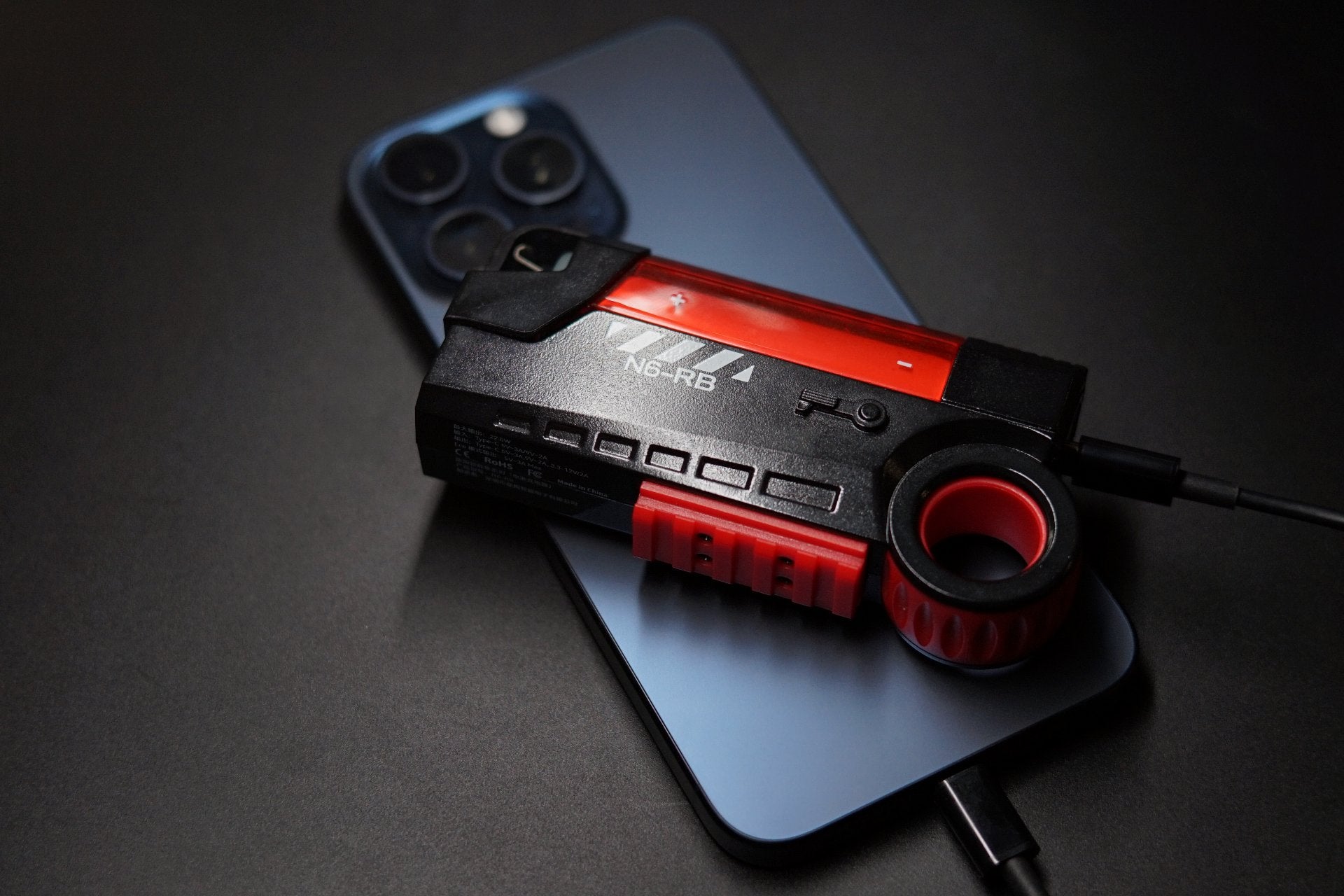
5,000mAh Capacity in the KangTao Smart N6-RB
The KangTao Smart N6-RB is designed around a replaceable 21700 battery. Its product specification lists 5,000mAh per battery.
This is the rated capacity of the battery cell, not a promise that the USB output port will deliver 5,000mAh at 5V.
As explained above, the usable output depends on voltage conversion, electronic power management and operating conditions.
The N6-RB illustrates how a 21700 cell can be used in a portable charging product while providing a user-accessible battery replacement option.
See the KangTao Smart N6-RB product page for current battery options and full product specifications.
Key Takeaways
- 21700 is a cell format, not a fixed capacity rating.
- Many commonly used 21700 cells are rated around 4,000–5,000mAh, while some high-capacity models reach 6,000mAh.
- Actual capacity depends on the specific cell model, its internal design and manufacturer test conditions.
- mAh measures electric charge capacity, while Wh measures electrical energy.
- A 5,000mAh cell at a nominal 3.6V represents approximately 18Wh.
- A power bank's usable USB output is lower than the cell's theoretical energy because voltage conversion and electronic circuits consume energy.
- A higher-capacity cell is not automatically compatible with every device. Always check the manufacturer's specifications.
Frequently Asked Questions
How much capacity does a 21700 battery have?
There is no single capacity defined by the 21700 format. Many commonly used models are rated around 4,000–5,000mAh, while some high-capacity models reach 6,000mAh. The exact rating depends on the specific cell model and its datasheet.
Is 5,000mAh a good capacity for a 21700 battery?
Yes. A 5,000mAh rating is a common capacity among high-capacity 21700 models. However, capacity alone does not determine whether a cell is suitable for a particular device. Voltage, discharge characteristics and other specifications also matter.
How many watt-hours does a 5,000mAh 21700 battery have?
At a nominal voltage of 3.6V, a 5,000mAh cell represents approximately 18Wh.
The calculation is:
5,000 × 3.6 ÷ 1,000 = 18Wh.
The manufacturer's datasheet should be used for the exact rated specifications of a particular cell.
Why does my power bank deliver less than its rated cell capacity?
A cell's mAh rating is measured at the cell's own voltage. A power bank must convert that voltage to the USB output level, and this process is not perfectly efficient.
The device's power-management circuits also consume energy. Consequently, the usable output is lower than the cell's theoretical stored energy.
Is a 6,000mAh 21700 battery better than a 5,000mAh one?
Not necessarily. A 6,000mAh cell offers a higher capacity rating, but it may have different discharge limits, physical dimensions, weight and charging requirements.
The better option depends on what the device is designed to support. Compare the complete datasheets, not capacity alone.
How does 21700 capacity compare with 18650?
Many 21700 cells offer more capacity per cell than comparable 18650 models because they use a larger physical format. However, capacity varies between individual models, so a specific cell-to-cell comparison is more meaningful than assuming every 21700 has a higher rating.
See 21700 vs 18650: Which Battery Cell Is Better?.
Can I install a higher-capacity 21700 cell in my power bank?
Only when the replacement meets the power bank manufacturer's requirements. The correct voltage, discharge characteristics, dimensions, terminal design and protection requirements matter as much as capacity.
A higher mAh number does not automatically make a cell compatible.