Why Replaceable Batteries Can Make Power Banks More Sustainable
A replaceable battery power bank can make a portable charger more sustainable because the part that wears out first is often the battery cell — not the casing, ports or electronics.
When the cell is the only component that needs to be replaced, less of the overall product may need to be discarded. But the word "can" matters: a swappable cell only reduces waste if replacement cells are genuinely available, the rest of the product lasts, and the old cell is handled properly.
This article looks at both the potential benefits and the limits of replaceable battery designs.
What Actually Makes a Power Bank Unsustainable?
Many power banks are sealed units. The battery cell is often glued or welded inside a case that is not designed to be opened, leaving no supported way for the user to replace the cell.
That creates a specific type of product waste:
- The battery cell can decline before the rest of the product. Rechargeable cells gradually lose capacity with use, while the casing, ports and electronics may continue functioning.
- One degraded component can retire the entire product. When battery capacity falls enough to become inconvenient, the whole power bank may be replaced even though many of its other components still work.
- There may be no supported service path. A sealed product gives users fewer options for replacing an individual worn component.
None of this is dramatic at the scale of one device. Multiplied across the number of power banks in circulation, however, it contributes to the ordinary, ongoing flow of electronic waste.
Why the Battery Cell Is Often the First Component to Decline
Rechargeable lithium-ion cells gradually lose capacity as they are used.
The rate of capacity loss depends on factors such as the specific cell model, charge and discharge conditions, depth of discharge, temperature and storage conditions. Heat and prolonged storage at a high state of charge can accelerate battery aging.
Two clarifications matter here:
- Capacity loss is normal, not necessarily a defect. A rechargeable cell can hold less energy after extended use as part of normal aging.
- 21700 and 18650 are sizes, not chemistries. A 21700 cell can be manufactured using different lithium-ion chemistries, and its capacity, discharge capability and cycle life depend on the specific cell model rather than the "21700" label alone.
That is why battery-life claims should always be tied to a specific cell specification. Two cells with the same physical dimensions can have different performance and aging characteristics.
How a Replaceable Cell Changes the Equation
If the battery cell is the component whose capacity gradually declines, designing the product so that the cell can be replaced changes what needs to be discarded.
|
|
Sealed Power Bank |
Replaceable-Cell Power Bank |
|
When capacity fades |
Whole unit may be retired |
The battery cell can be replaced |
|
What is discarded |
Potentially the cell, case, ports and electronics |
Primarily the worn cell |
|
What stays in use |
May be discarded with the battery |
Case, ports and electronics |
|
Service path |
Usually no user battery replacement |
Designed for user battery replacement |
The comparison is straightforward on paper: if the electronics, casing and ports remain functional, replacing only the worn battery can reduce the amount of product material that needs to be discarded.
For the mechanical side of how a replaceable design works, see How Does a Replaceable Battery Power Bank Work?.
The Honest Caveats: Replaceable Is Not Automatically Green
This is where sustainability claims can easily become overstated.
A swappable battery is a precondition for reducing some forms of product waste, not a guarantee of a lower environmental impact.
Several things have to be true.
Replacement Cells Must Actually Be Available
If replacement cells are not sold, or are only available for a short period, the replaceable design has limited practical value.
Availability is what turns a design feature into a real service option.
The User Has to Actually Replace the Cell
A replaceable battery only extends the life of the main product when the user actually replaces the worn cell instead of replacing the entire power bank.
The environmental benefit therefore depends on real-world use, not simply on the existence of a removable battery.
The Rest of the Product Has to Last
If the USB port, electronics, switch or casing fails early, the benefit of replacing the battery becomes smaller.
The replaceable cell matters most when the rest of the product remains functional.
Replacement Cells Have Their Own Environmental Footprint
Manufacturing, transporting and eventually disposing of a replacement cell also consumes resources.
Replacing one cell is not impact-free. The potential benefit comes from avoiding the disposal and replacement of a larger functional product when the battery is the component that actually needs replacement.
The Old Cell Still Needs Proper Handling
Lithium-ion cells should not be placed in general household waste.
A replaceable design is more meaningful from a waste-reduction perspective when worn cells are taken to an appropriate battery or e-waste collection point.
Stated plainly:
A replaceable battery can reduce waste when it is supported by real replacement availability, a durable product and responsible end-of-life handling. Without those conditions, replaceability is simply a feature on a specification sheet.
Where Standard Cell Formats Help
Standardized cylindrical cell formats can make replacement more practical.
Formats such as 21700 and 18650 have defined nominal dimensions and are produced by many manufacturers. This creates a broader ecosystem than a completely proprietary battery pack.
However, standardized physical dimensions do not mean that every cell of the same size is interchangeable.
A replacement cell may also need to match:
- Voltage requirements
- Cell chemistry
- Capacity
- Discharge characteristics
- Physical dimensions
- Terminal design
- Protection requirements
- The electrical requirements of the device
The standardized physical format makes replacement more practical, but the specific cell specification determines whether a replacement is actually compatible.
For a size comparison, see 21700 vs 18650: Which Battery Is Better for Power Banks?. For how cylindrical cells compare with pouch cells, see Pouch vs. 21700 Battery Cells: Which Is Better for Power Banks?.
What Responsible Battery Replacement Looks Like
If you replace a battery cell, a few basic practices help keep the process safe and practical:
- Use a correctly specified replacement cell. The replacement should match the device's required voltage, capacity, discharge characteristics, physical dimensions and protection requirements.
- Buy from a reputable source. A standard cell format can make sourcing easier, but the specific cell still needs to meet the device requirements.
- Do not use a damaged cell. Swelling, unusual heat, physical damage or a damaged wrapper are reasons to stop using the cell.
- Recycle the old cell properly. Take worn lithium-ion cells to an appropriate battery or e-waste collection point rather than placing them in general household waste.
- Do not over-buy spare cells. Batteries can age during storage, so buying more cells than you realistically need can create unnecessary waste.
Making Any Power Bank Last Longer
Regardless of whether a power bank uses a replaceable cell, certain habits can help slow battery aging:
- Avoid leaving the device in very hot environments, including hot cars or direct sunlight.
- Avoid storing the battery at 100% charge for months at a time when possible.
- Use cables and chargers that are in good condition.
- Avoid routinely discharging the battery completely when you have the choice.
These habits do not stop battery aging. They can simply help slow the process, which may reduce how frequently the battery or the overall product needs to be replaced.
How the KangTao Smart N6-RB Uses a Replaceable 21700 Cell
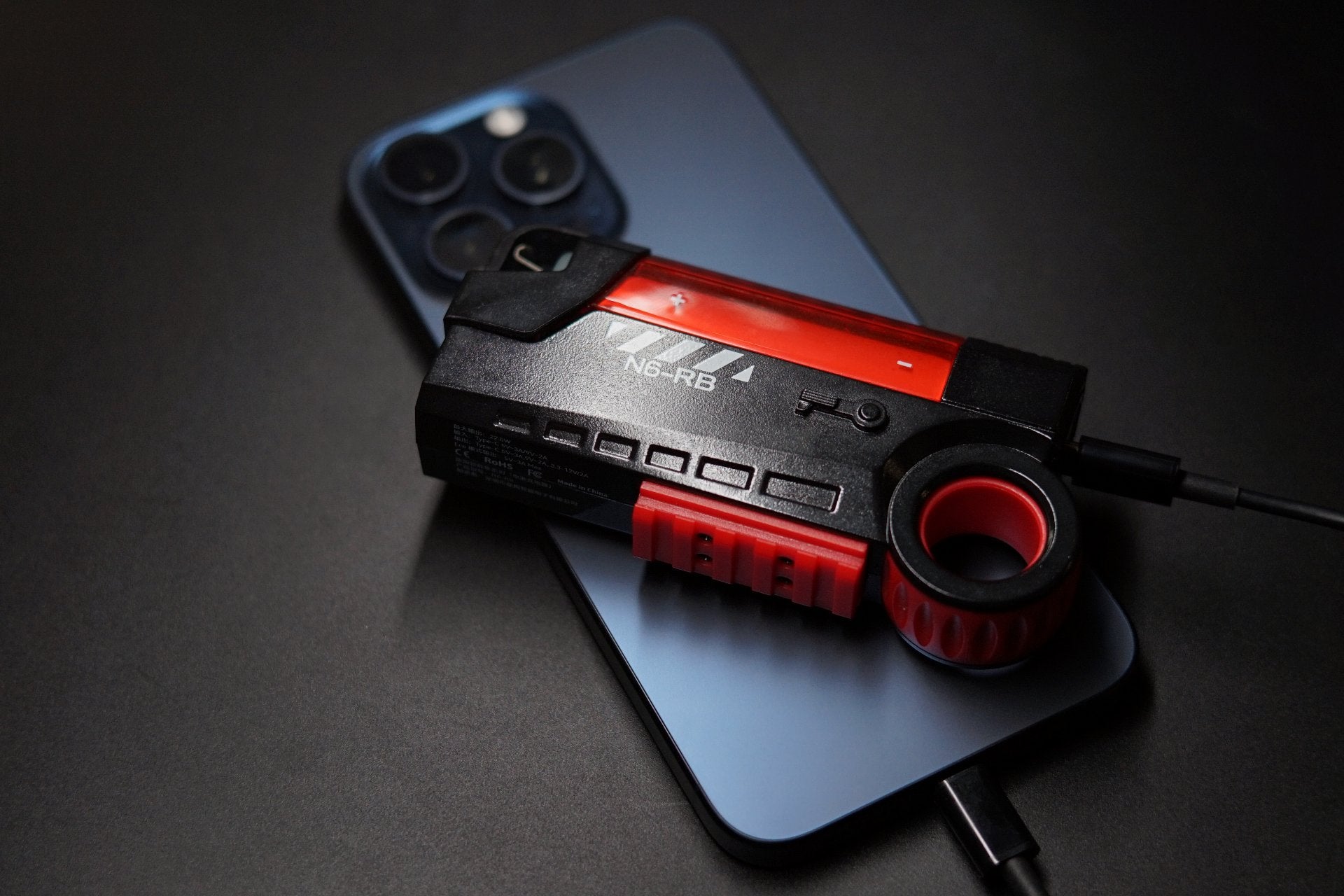
The KangTao Smart N6-RB is a replaceable battery power bank built around a removable 21700 cell.
Instead of permanently sealing the battery inside the product, the N6-RB is designed so that the cell can be removed and replaced by hand.
That design combines three ideas:
21700 cell format + replaceable battery + modular power.
The goal is not to claim that a 21700 cell is universally better or more sustainable than every other battery format. Instead, the cylindrical cell format supports the N6-RB's specific modular product architecture.
When the battery reaches the end of its useful service life, the cell can be replaced rather than automatically retiring the entire power bank.
The N6-RB uses a 5000mAh 21700 cell, supports up to 22.5W fast charging over USB-C, and has a stated weight of approximately 55g.
For more information about the technical reasons for using a 21700 cell in a power bank, see Why Choose a 21700 Battery for a Power Bank?.
For the practical side of battery replacement, see How Does a Replaceable Battery Power Bank Work?.
Key Takeaways
- A battery cell is often one of the first components of a power bank whose performance noticeably declines with use.
- In a sealed power bank, one degraded component can result in the entire product being retired.
- A replaceable battery allows the worn cell to be replaced while the rest of the product remains in service.
- Replaceability is a precondition, not a guarantee, of reducing product waste.
- Replacement cells need to be genuinely available for the design to remain useful over time.
- 21700 and 18650 describe physical dimensions, not battery chemistry.
- Standardized cell formats can make replacement more practical, but the specific cell must still be electrically and mechanically compatible with the device.
- Replacement cells also have an environmental footprint, so the potential benefit comes from extending the useful life of the main product.
- Proper collection and recycling of worn lithium-ion cells remain important.
Frequently Asked Questions
Are replaceable battery power banks more sustainable?
They can be. Because the battery cell is often one of the first components whose performance declines, replacing the cell instead of the entire unit can keep the case, ports and electronics in service and reduce the amount of product material discarded. The benefit depends on replacement cells being available, the rest of the product remaining functional and the old cell being handled properly.
Why do most power banks end up as e-waste?
Many power banks use sealed battery designs. When the battery's capacity declines, there may be no supported way for the user to replace the cell, so the entire unit may eventually be retired even though many of its other components remain functional.
Does a replaceable battery automatically make a product eco-friendly?
No. Replaceability only creates the possibility of extending product life. The benefit depends on replacement cells being available, the rest of the product lasting long enough to justify replacement, and the worn cell being properly handled at the end of its life.
Is 21700 a type of battery chemistry?
No. 21700 describes the approximate physical dimensions of a cylindrical cell. Chemistry, capacity, discharge capability and cycle life depend on the specific cell model.
What should I do with a worn 21700 cell?
Take it to an appropriate battery or e-waste collection point. Lithium-ion cells should not be placed in general household waste.
The KangTao Smart N6-RB
The KangTao Smart N6-RB is built around a replaceable 21700 cell in a compartment designed to be opened by hand, allowing the battery to be replaced without tools.
The unit weighs approximately 55g, supports up to 22.5W fast charging over USB-C, and includes protection against overcharge, over-discharge, overcurrent, overvoltage, short circuit and over-temperature conditions.
See the N6-RB product page for current options and full specifications.